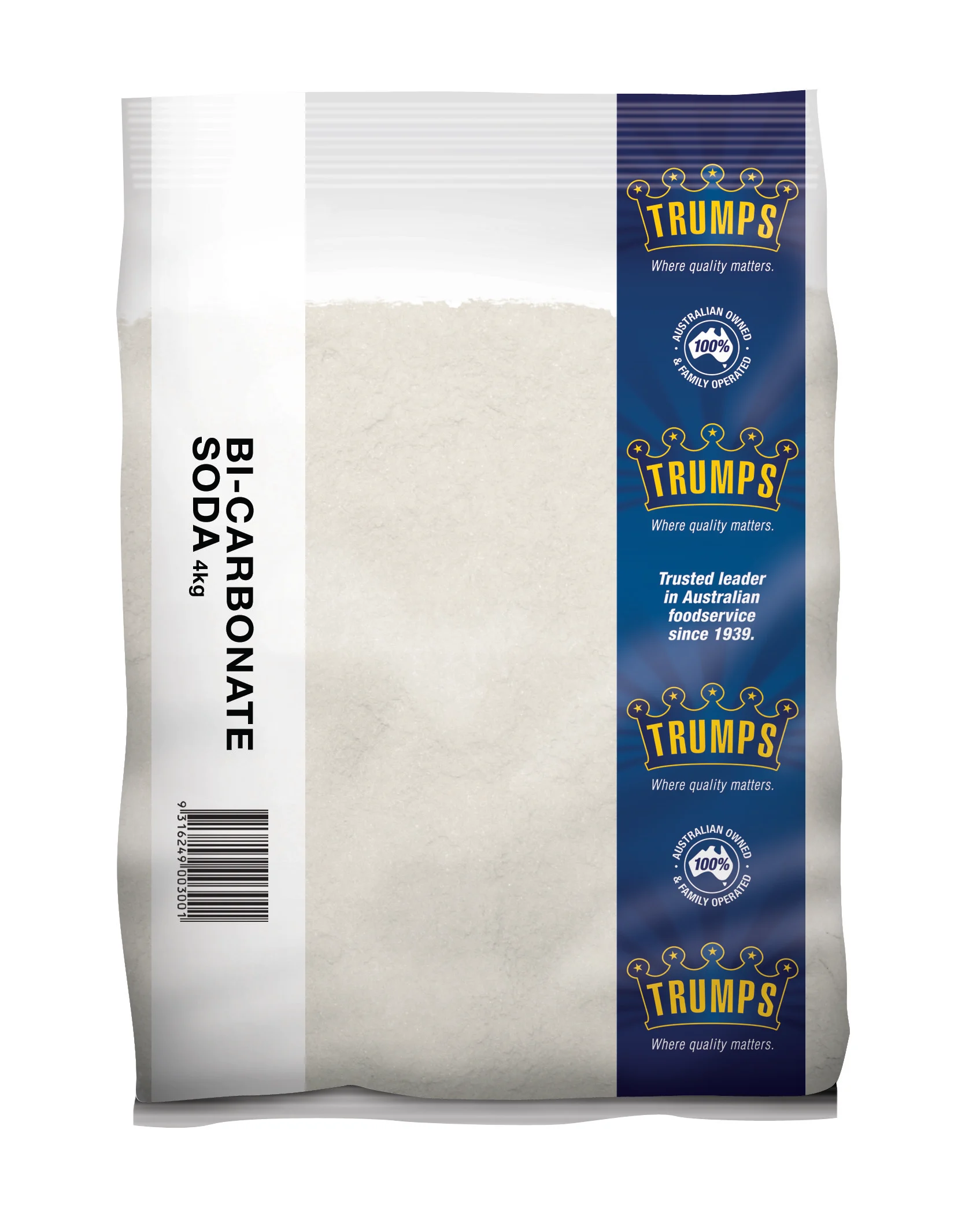
Trumps Bi-Carbonate Soda 4 Kg
Bi-Carbonate Soda – Your All-Purpose Cleaning Essential
One simple ingredient. So many ways to clean.
Bi-carbonate soda—also known as baking soda—is a wonderfully versatile addition to your cleaning cupboard. Its gentle abrasive action makes it useful for scrubbing, while its ability to help absorb and neutralise odours makes it ideal for freshening everything from fridges to carpets.
Use it on its own for everyday cleaning, or pair it with cleaning vinegar for jobs where the two ingredients work particularly well together.
20 Ways to Use Bi-Carbonate Soda Around Your Home
1. Clean kitchen sinks
Sprinkle bi-carb over a damp sink and scrub gently with a sponge or cloth to lift grime and leave the surface looking fresh.
2. Scrub stovetops
Use bi-carb as a gentle abrasive to help remove food residue and everyday grime from stovetops.
3. Freshen your fridge
Place an open container of bi-carb in the refrigerator to help absorb unwanted odours. You can also use a bi-carb paste to clean shelves and surfaces.
4. Remove odours from rubbish bins
5. Deodorise carpets and rugs
Sprinkle bi-carb over a dry carpet or rug, leave it for a while to absorb odours, then vacuum thoroughly.
6. Freshen upholstery
A light sprinkling of bi-carb can help freshen fabric upholstery. Allow it to sit before vacuuming thoroughly.
7. Clean oven surfaces
Make a paste with bi-carb and water and use it to help loosen baked-on food and grease from suitable oven surfaces.
8. Clean microwave interiors
Apply a damp bi-carb paste to stubborn food splashes, then wipe away with a clean damp cloth.
9. Remove tea and coffee stains
Use bi-carb with a little water to gently scrub away marks from mugs, cups and other suitable surfaces.
10. Clean reusable drink bottles
A little bi-carb and warm water can help remove lingering smells and residue from bottles and containers.
11. Freshen cutting boards
Sprinkle bi-carb onto a damp cutting board and scrub to help remove food residue and unwanted odours.
12. Clean greasy kitchen surfaces
Bi-carb can help lift everyday grease and grime from suitable hard surfaces when used as a gentle scrub.
13. Freshen shoes
Sprinkle a small amount inside shoes, leave overnight, then shake or vacuum out to
help absorb odours.
14. Deodorise bins and storage containers
Use bi-carb to help neutralise lingering smells in food containers, lunch boxes and storage tubs.
15. Clean bathroom surfaces
Make a paste with bi-carb and water and use it as a gentle scrub for sinks, baths and other suitable bathroom surfaces.
16. Freshen mattresses
Lightly sprinkle bi-carb over a dry mattress, leave it for several hours, then vacuum thoroughly.
17. Clean grout
Apply a bi-carb paste to suitable grout, gently scrub with a brush, then rinse clean.
18. Remove odours from pet areas
Bi-carb can help absorb unpleasant smells in areas such as pet bedding and other suitable washable or vacuumable surfaces.
19. Clean burnt-on residue from cookware
A bi-carb paste can help loosen stubborn food residue from suitable pots and pans. Allow it time to work before scrubbing and rinsing.
20. Freshen your laundry
Add bi-carb to the wash to help freshen laundry and reduce unwanted odours. Follow your garment and washing-machine manufacturer’s recommendations.
Additional information
| Weight | 4.1 kg |
|---|---|
| Dimensions | 29 × 24 × 3.5 cm |
Bi-Carb + Cleaning Vinegar: A Powerful Cleaning Partnership
Bi-carbonate soda and cleaning vinegar are both useful household cleaners, but they work in different ways.
Bi-carb is particularly useful when you need gentle scrubbing, odour absorption or help loosening grime. Cleaning vinegar is useful for cutting through mineral deposits, soap residue and other alkaline grime.
When combined, the two ingredients react and fizz. That bubbling action can be useful for helping to loosen dirt and debris—but because the reaction also neutralises much of the acidity and alkalinity, using them one after the other is often more useful than simply mixing them together.
Here are some jobs where using both can be particularly handy:
Unclog and freshen drains
Start with bi-carb, followed by cleaning vinegar, to create a fizzing reaction that can help loosen and dislodge light residue in a drain. Flush thoroughly with water afterwards.
Note: This is best suited to light cleaning and freshening, rather than serious blockages.
Clean bathroom sinks
Use bi-carb first as a gentle scrub for grime and residue, then use cleaning vinegar to
help dissolve mineral deposits. Rinse thoroughly.
Freshen shower drains
Bi-carb can help with odours and residue, while vinegar can help tackle mineral deposits. Use them sequentially and rinse well.
Clean shower screens
Use bi-carb as a gentle scrub for stubborn soap residue, then cleaning vinegar to help tackle water marks and mineral deposits. Rinse and dry the glass afterwards.
Tackle stubborn bathroom grime.
For particularly dirty sinks, baths or tiles, bi-carb can provide the scrubbing action while cleaning vinegar can help break down mineral deposits.
Clean washing-machine residue.
Bi-carb can help freshen and deodorise, while cleaning vinegar can help tackle mineral deposits and residue. Follow your washing-machine manufacturer’s instructions before using either product inside the appliance.
A Simple Cleaning Duo for Your Home
Bi-carbonate soda + Cleaning Vinegar = two versatile cleaning cupboard essentials.
Keep bi-carb handy when you need to scrub, deodorise and freshen.
Reach for cleaning vinegar when you need to tackle mineral deposits, soap residue and everyday grime.
And for some cleaning jobs, using them separately and in sequence can give you the benefits of both.
Discover our Cleaning Vinegar
A Few Important Tips
Bi-carbonate soda is generally gentle, but always test on an inconspicuous area first and check the manufacturer’s care instructions for the surface you are cleaning.
Bi-carbonate soda is not a disinfectant or steriliser.